
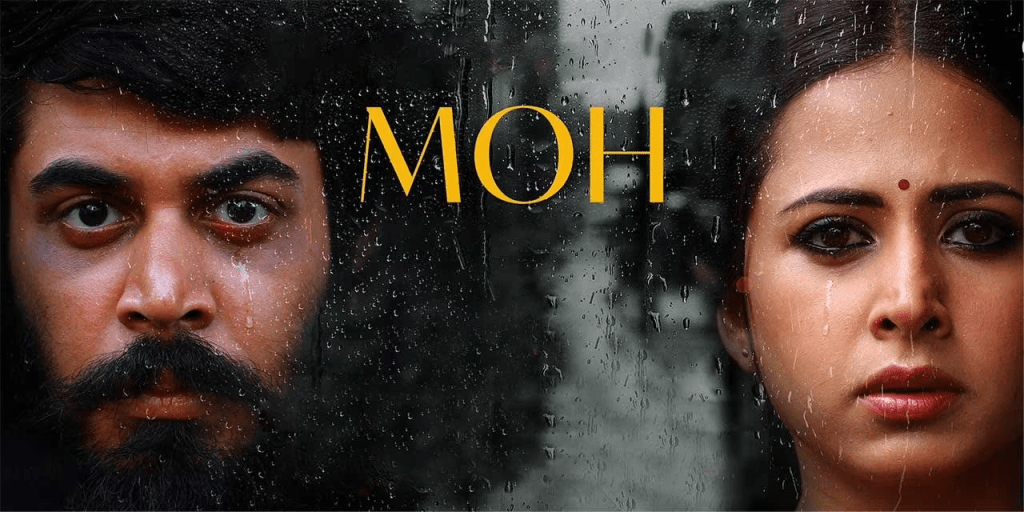
Tears, Fears, and Peers
Moh narrates the story of a poetic prodigy who falls not for the boobs but for Mills and Boon. Rabbi (Bindrakhia) has just entered that magical realm of youth when stories and satori seem real. It is his time when he is pleasantly developing into a man. He meets Gorey (Mehta), who has known life in practical terms. She knows her teapot is more important than this poet; she knows she has to take her husband’s beatings for their son’s heartbeats; she knows society considers her a black eye; she knows men around her would not mind entering her part that her son used for exiting her; she knows death takes too much courage.
Still, they fall for each other one day. Why?
Rabbi has the heart of a poet. He cannot really make peace with someone’s being in pain. He would do anything to relieve them of the purgatory. She, on the other hand, has suppressed her desires. It does not mean she will not pounce on a glimmer of love when she sees it. This happens, and the love story starts.
Moh hit me hard for its realistic depiction of life. Mostly, it’s shown that things change in a jiffy. The hero would leave everything for the damsel in distress in ten days. Here it does not go about like that. Rabbi knows his familial limitations; his naiveté does not let him take any on-the-spot decisions. Yes! We do realize after some time what is more important, and so does Rabbi when the epiphany strikes.
One thing that irked me a little was Gorey’s rapid literacy. She learns languages to read complex texts too soon to be true. I may not have understood the timeline properly, and there are fast learners. Hence, this minor liberty can be ignored.
Mehta is very, very good, but her expressions do not convey the ache she goes through. I remember a scene from a song in Sardaarji. In that scene, Mandy puts forth her agony just by moving her head. Even Mehta herself in Qismat 2, especially in the laughter-to-tears scene, was the touchstone for a bemoaning belle.
Bindrakhia makes a fair debut. Of course, his work is raw. That said, his getup, eyes, and innocence work in his favor.
Amrit Amby is quite nice. I have seen him in a few films, and he has never disappointed me. The rest of the cast is good.
I am a Jagdeep Sidhu fan, and I am satisfied again. The way the narration takes place is realistically out of the world. Similarly, the screenplay by him, Shiv Tarsem Singh, and Govind Singh combines heaven and the Earth perfectly. For instance, there is a scene in which Rabbi and Gorey meet at dawn. The scenery in this scene along with what the characters do is surreal. Similarly, the montage in which Mehta relates her history will kill you.
Navneet Misser’s cinematography is fantastic. The film is a painting. Manish More’s editing is superb. The film never really bores you. The music and the lyrics (you know by whom) are the pièce de résistance. The background music is perfect, too.
On the whole, Moh delivers what it promises: dozens of doleful dollops that will make your sadness know life is strife.
 IELTS Oggy