
________________________
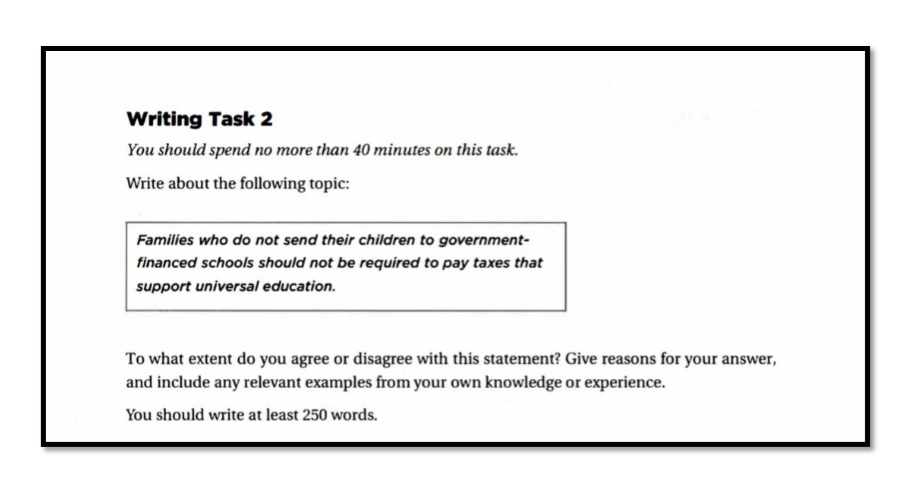
Education is a right of every child. Sometimes, a child’s parents do not have sufficient money to support its education. Thus, the governments of different nations impose a tax on wealthy sections of society. This tax is used to support the education of the unprivileged children. According to this essay, this tax ought to be paid by a family even if its children do not go to a state-sponsored school.
A major basis for this standpoint is humanitarian in essence. That is to say, as humans, we have a duty to help those in need of something. For instance, every religious scripture vouches for serving mankind. Hence, when we pay a tax that aids poor children’s education, we serve the purpose of being a human.
Another primary reason for the stated standpoint is keeping wealthy-family children from bad company. To be precise, we cannot be with our young ones always. Even though they study at a prestigious school, they will meet all kinds of children after school. For example, they may play with a housemaid’s children in a common local park. In such cases, rich parents’ children can learn many wrong things from raw poor children. Nonetheless, if, by paying a tax, we help our governments educate the poor children, they will also become better. Thus, rich parents’ children will be relatively little prone to learning bad things.
In conclusion, it is desirable that well-off households pay taxes that support the education of unprivileged kids. This has a humanitarian foundation. Moreover, rich children will have safer companions.
 IELTS Oggy