
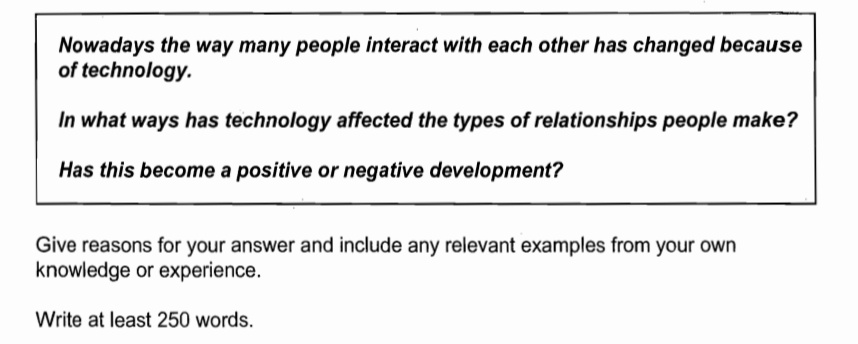
In today’s scenario, interfacing with one another has been altered by technological advancements.
Owing to this shift, we, now, get into short-lived bonds. To be precise, online platforms enable us to get connected with many individuals. In real life, a person thinks many times before putting paid to an alliance. On the other hand, virtually, the burden of break-up confrontations is negligible. Hence, as soon as we feel that we no longer want to continue a communion, we end it. For instance, I was dating a girl on an online platform. One day, I told her that I had been losing hair. She blocked me, and now I do not know how to contact her.
Similarly, digitalization has rendered us more vocal, too. That is to say, on account of psychological blocks like fear and our social image, we are often unable to put forth our viewpoints. This, however, is not the case in the digital sphere. Since the person being judged is not in front of us, we do not mince our words. For example, the #MeToo movement encouraged many victims to bring to notice their sexual harassment experiences. Such bold confessions could have been stifled by social norms in the real world, especially in India, as sex and statements about it are more or less taboos.
This modified mode of relationship-making is advantageous. This is because sometimes we succumb to toxic relationships in real life. That is caused by force of emotions. Hence, if a virtual session helps us get out of such poisonous bonds, we are benefited a great deal. On similar lines, on and off, we tend to acquiesce in the majority’s decision. The psychological aid resulting from a distant relationship makes us raise a voice and customize a decision as per our own point of view.
In conclusion, technology has given us an opportunity to build short-term and fair relationships. They are beneficial as they help us be confident.
 IELTS Oggy